Managing High-Volume Multi-Recipient Dispatches Without Sequence Errors
Preparing dispatches for multiple recipients simultaneously introduces distinct operational hazards that single-package shipments rarely face. The primary cause of delivery failures in batch mailings remains cross-recipient mismatches, where personalized documents or custom parcel contents end up inside envelopes addressed to different contacts. Establishing an unbroken chain of physical cross-verification eliminates these costly mix-ups before carrier handover.
Batch shipments require structured staging tables where packaging, weighing, and labeling occur in distinct chronological phases rather than simultaneous ad-hoc processing. Workers should assemble identical outer containers first, verify internal recipient identifiers against the master dispatch manifest, and apply shipping barcodes only after confirming envelope payload concordance.
Critical Batch Sorting Precaution
Never batch-seal outer packaging before completing a secondary physical count. Once envelopes or cartons are closed, detecting a transposed address or missing document requires tearing down the entire batch.
Master Manifest Protocols and Batch Segregation
Organizing parcels into geographic or carrier service tiers streamlines intake at postal facilities and prevents accidental misrouting. Implement these core verification standards across every multi-recipient shipment:
- Reconcile total physical parcel count against digital manifest entries before generating final carrier scan forms.
- Check individual recipient apartment, suite, and department numbers against updated database records to prevent return-to-sender loops.
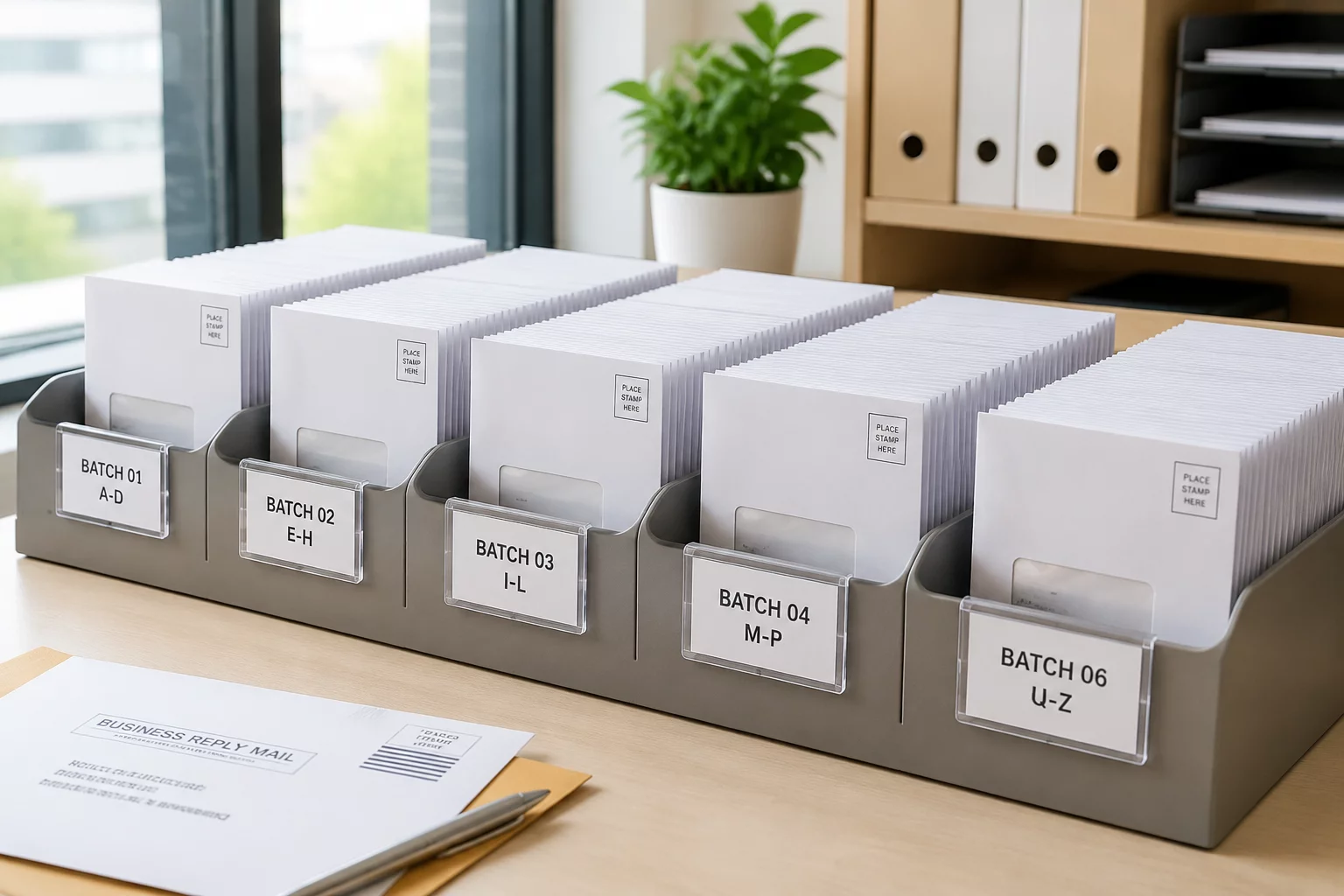
- Segregate domestic, international, and priority delivery items into distinct physical loading bins to avoid postage tier errors.
- Apply uniform, tamper-evident tape along center box seams while ensuring barcodes remain flat and scan-ready.
Operational Step Verification
Check all steps before clearing item for courier dispatch.
Bulk data exports frequently contain formatting irregularities, truncated suite numbers, or outdated postal codes. Run address files through postal standardization tools before printing labels to prevent sorting machine rejections and unexpected return fees.
When sending identical gift boxes or kits to multiple recipients, weigh each sealed unit to confirm uniform weight. Any outlier box indicates either missing components or double-packed items that warrant immediate inspection before dispatch.