Executive Audit Summary
A printed label means your shipping software communicated with carrier servers, but the carrier does not possess the carton yet. Legal liability, transit service level agreements, and insurance coverage activate only after a physical acceptance scan occurs at the induction point.
The Illusion of Pre-Shipment Status Updates
When an office assistant clicks print on a mailing manifest, carrier systems register a record titled Shipping Label Created or Pre-Shipment Info Received. This status simply announces that electronic postage exists. The parcel often remains sitting on a dispatch shelf, in a mailroom bin, or inside an outgoing dock staging zone for hours or even days.
Recipients tracking this initial barcode believe the package is already moving across regional transit hubs. In reality, until a mail carrier physically scans the barcode with a handheld terminal at pickup or retail acceptance, the item remains entirely under the sender responsibility.
Mandatory Verification Criteria
Never consider an urgent parcel dispatched solely on the basis of a generated label. Senders must obtain an Acceptance scan timestamp or an official counter receipt before closing business dispatch logs.
Point-of-Induction Verification Protocols
Establishing clear verification boundaries prevents customer confusion and lost cargo disputes. Dispatch personnel should follow a standardized chain of custody protocol every time shipments transfer to postal collection drivers or retail windows.
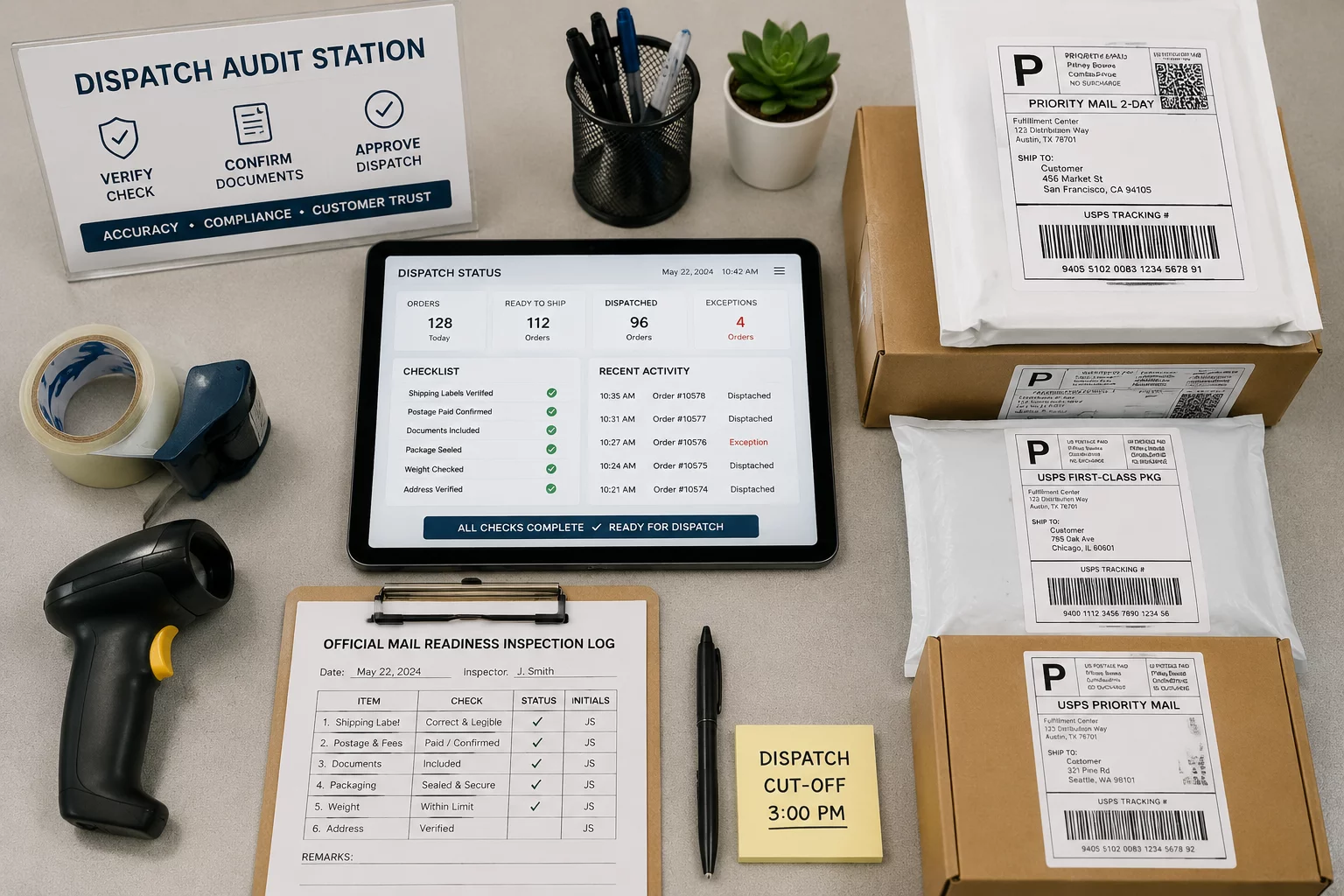
Pre-Dispatch Inspection Checklist
-
Physical acceptance barcode scanned and confirmed on driver handheldVERIFIED
-
SCAN form manifest signed and dated during high-volume bulk handoffsVERIFIED
-
Discrepancy between printed manifest count and actual piece count resolvedVERIFIED
Navigating the Transit Dead Zone
When packages enter unattended collection bins or bulk drop chutes, they enter a temporary visibility vacuum. They remain unscanned until arrival at the initial sorting facility, creating a gap where neither sender nor carrier can confirm custody. High-value parcels and time-sensitive documents must always avoid unattended drops to preserve an unbroken audit chain.