Executive Audit Summary
A smooth carrier handoff bridges internal package preparation and commercial transit networks. Transfer errors happen when parcels are handed over without barcode readability validation, manifest reconciliation, or physical custody confirmation. Following these verified handoff protocols eliminates initial scan delays and prevents lost shipment inquiries.
Physical Verification Prior to Transfer
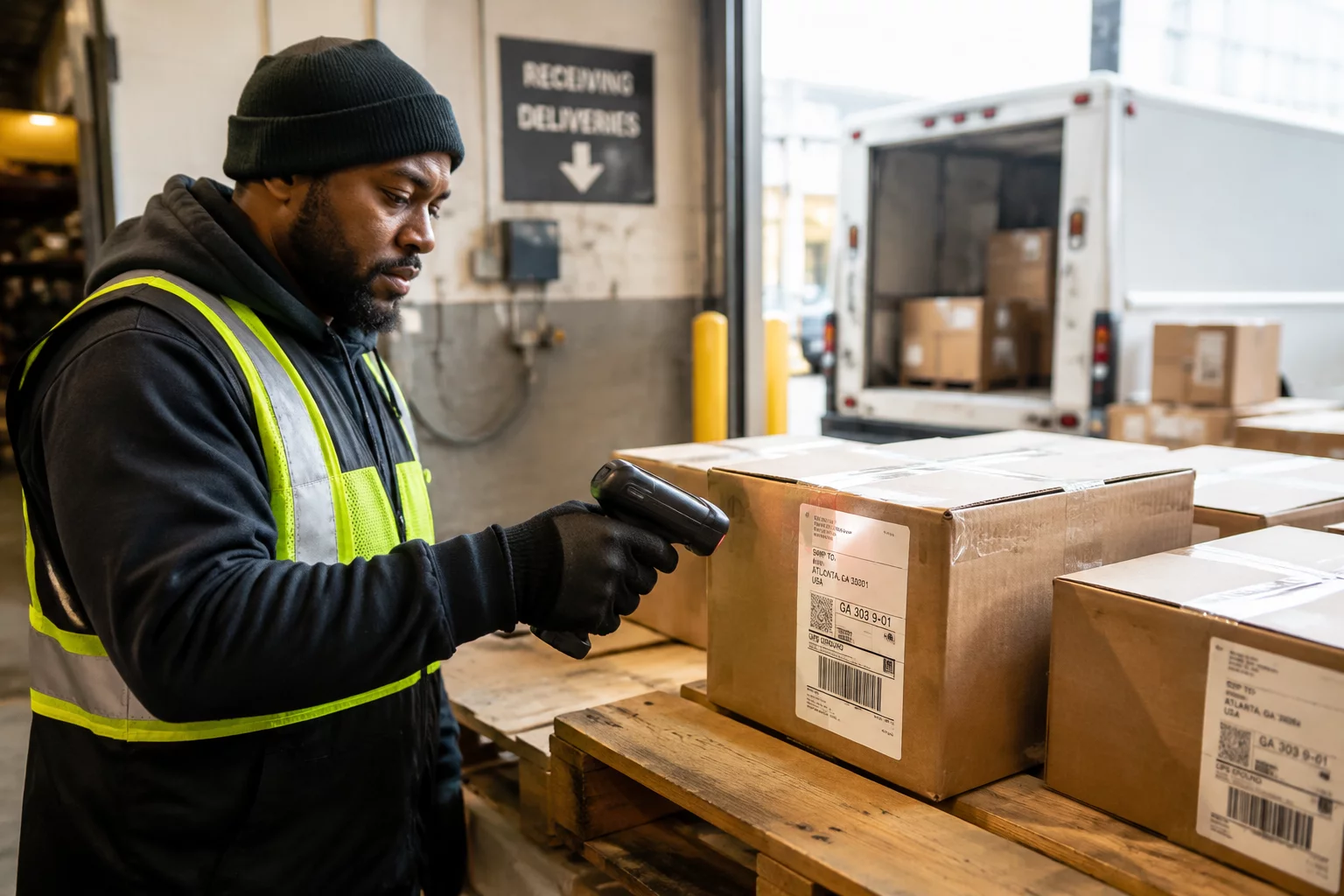
Before any driver arrives or packages reach the counter, your dispatch team must conduct a thorough physical audit. Every parcel requires a clean, unobstructed 2D barcode and unambiguous routing indicators placed firmly on the primary face. Cartons resting on pallets or staging tables should remain upright with shipping labels visible at a glance, preventing excessive manual handling during collection.
Damaged outer tape, loose poly seams, or bulging carton edges indicate packing failure before the journey even starts. Carrier drivers frequently reject or deprioritize compromised cartons during rapid pickup cycles. Catching structural issues while the package sits on your staging counter takes less than a minute, whereas recovering a damaged shipment from a transit hub takes days.
Mandatory Verification Criteria
Never hand off unmanifested items or parcels with provisional tracking numbers without obtaining an initial physical acceptance scan or a signed handover log.
Driver Interface and Custody Transfer
When the carrier driver arrives on site, systematic communication ensures both parties agree on piece counts and parcel conditions. Presenting an organized shipment batch alongside a master SCAN sheet or manifest allows the driver to confirm entire containers with a single barcode read, minimizing dock turnaround time and human counting mistakes.
Pre-Dispatch Inspection Checklist
-
All destination labels scanned and verified against dispatch manifestVERIFIED
-
Physical carton integrity and corner seals inspectedVERIFIED
-
Master SCAN form barcode presented and scanned upon pickupVERIFIED
Documenting Chain of Custody
Maintaining an archival record of the exact dispatch timestamp, pickup vehicle number, and carrier driver identifier provides an auditable defense if transit disputes arise. Modern operations log the timestamped acceptance receipt directly into enterprise dispatch records immediately after the driver departs.